
The company made its first lifetime commitment to an athlete after 12 years of building LeBron’s signature business. But the billion-dollar figure was never publicly confirmed, and the agreement did not make him a Nike shareholder.
By Marcio Tamer
Updated October 31, 2026
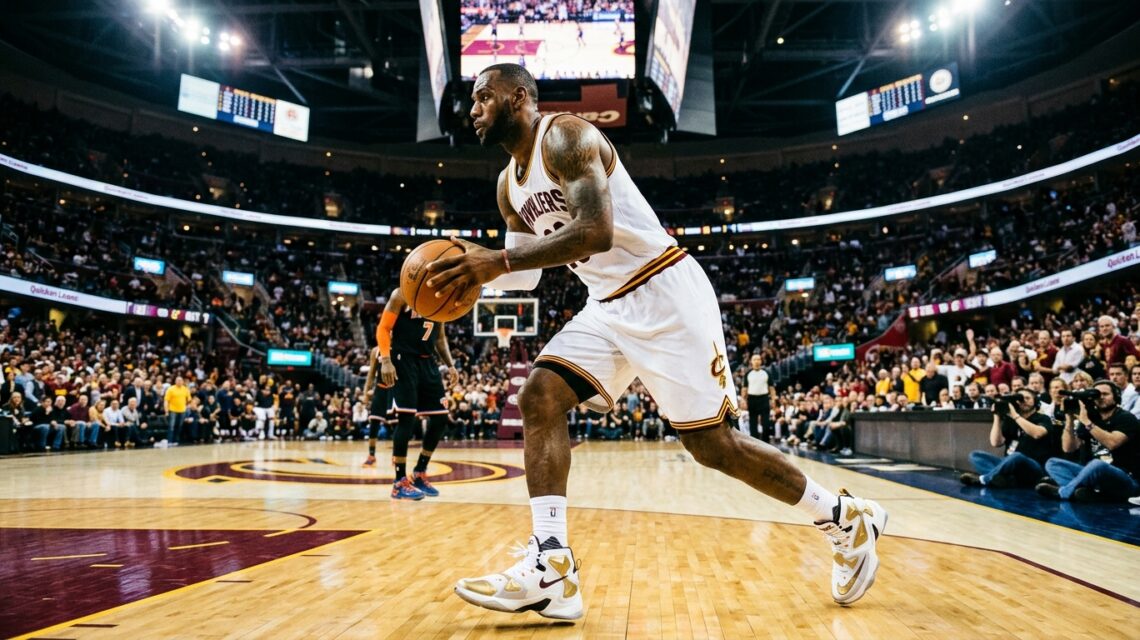
On December 7, 2015, Nike announced an unprecedented lifetime endorsement agreement with LeBron James, extending a partnership that had begun when he was an 18-year-old high school basketball star.
The deal was described as the largest single-athlete guarantee in Nike’s history.
Its exact value was not disclosed.
Five months later, LeBron’s longtime business partner Maverick Carter suggested that the agreement could be worth more than $1 billion over its lifetime.
That extraordinary figure became the defining headline.
But the most revealing number was already public.
In the 12 months ending January 2015, Nike sold approximately $340 million worth of LeBron James signature shoes in the United States, according to retail data from SportScanInfo cited by Forbes.
That was nearly twice the reported sales of Kevin Durant’s signature line, the second-largest among active NBA players at the time.
Nike was not simply making a billion-dollar bet on LeBron’s future popularity.
It was attempting to secure a commercially established business that had already spent more than a decade generating substantial sales.
The agreement also reflected a larger change in sports marketing.
The biggest athletes were no longer valuable only while competing.
Their names, products and cultural influence could continue generating revenue long after retirement.
Nike’s original $90 million gamble came before LeBron played an NBA game
LeBron James entered the professional basketball business with extraordinary expectations.
As a teenager at St. Vincent-St. Mary High School in Akron, Ohio, he attracted national attention for his performances.
His games drew large crowds.
Major television networks broadcast his appearances.
Sports companies recognized his commercial potential before he entered the NBA.
In 2003, Nike competed with Adidas and Reebok for the opportunity to sign him.
Reebok reportedly offered more guaranteed money than Nike.
But LeBron chose the company that had built its basketball business around Michael Jordan.
He signed a seven-year agreement widely reported at approximately $90 million.
Some contemporary accounts placed its value at $93 million, reflecting differences in reported contract terms.
The agreement was extraordinary because LeBron had not yet played a professional basketball game.
Nike was committing tens of millions of dollars to a teenager whose future NBA performance remained untested.
The company was purchasing the opportunity to build a signature footwear business around him.
LeBron made his NBA debut for the Cleveland Cavaliers on October 29, 2003.
He wore the Nike Air Zoom Generation, his first signature basketball shoe.
The product was designed specifically around his identity and playing style.
It also carried his personal branding.
Nike had begun turning LeBron from a sponsored athlete into a long-term product franchise.
Why Nike was willing to risk so much money in 2003
Nike had already learned how valuable a basketball player’s identity could become.
Its partnership with Michael Jordan had transformed the sneaker industry.
The original Air Jordan line launched in the 1980s and developed into a major global business.
Jordan’s commercial appeal continued long after his retirement.
His shoes remained culturally relevant because they represented more than basketball performance.
They became fashion products, collectibles and symbols of personal identity.
Nike wanted to develop another long-lasting basketball franchise.
LeBron appeared to offer that possibility.
He combined exceptional athletic ability with enormous media attention.
He was also entering the NBA at a time when global basketball audiences were expanding.
The commercial potential extended beyond the United States.
Nike could sell LeBron-branded footwear and apparel to consumers in Europe, Asia and other markets.
But the company faced significant risk.
LeBron had to justify the enormous expectations surrounding his arrival.
He needed to become an elite NBA player.
He also needed to maintain a public identity capable of supporting long-term consumer demand.
The original agreement was therefore a major investment in an uncertain future.
By 2015, that uncertainty had changed dramatically.
The LeBron signature line became a $340 million business
During his first 12 years in the NBA, LeBron developed into one of the sport’s defining players.
He won NBA Most Valuable Player awards.
He reached multiple NBA Finals.
He won championships with the Miami Heat in 2012 and 2013.
He also became one of the most recognizable athletes in the world.
His commercial value grew alongside his sporting success.
Nike released new signature shoes regularly.
The company developed products for performance basketball, training and casual wear.
The LeBron line also benefited from international distribution and growing interest in basketball-inspired fashion.
By 2015, the financial results were substantial.
SportScanInfo data cited by Forbes showed that Nike sold approximately $340 million in LeBron signature shoes in the United States during the 12 months ending January 2015.
That represented an increase of approximately 13% from the previous year.
Kevin Durant’s signature line generated approximately $195 million in comparable sales.
Kobe Bryant’s line generated approximately $105 million.
LeBron was the leading active NBA player in signature footwear sales.
The comparison was important.
Nike had several commercially successful basketball stars.
But LeBron’s line was substantially larger than those of his active competitors.
The company had a strong incentive to prevent that business from moving to a rival brand.
Why Nike offered LeBron a lifetime contract in December 2015
On December 7, 2015, Nike confirmed that it had reached a lifetime agreement with LeBron.
The announcement was historic.
Nike had previously signed major endorsement contracts with athletes including Michael Jordan, Kobe Bryant, Tiger Woods and Kevin Durant.
But LeBron’s agreement was widely described as the company’s first formally announced lifetime athlete contract.
Nike said the partnership would continue generating value beyond LeBron’s playing career.
The wording was significant.
The company was no longer negotiating only for the years in which LeBron would compete in the NBA.
It was securing a relationship intended to continue after retirement.
That changed the economic calculation.
A conventional endorsement contract has a defined expiration date.
The company must eventually renegotiate or risk losing the athlete to a competitor.
A lifetime agreement can reduce that uncertainty.
It also allows a brand to plan product development, marketing and licensing over a much longer period.
For LeBron, the arrangement offered financial security and continuity.
His signature products could remain associated with Nike after his basketball career ended.
The agreement reflected a shared belief that his commercial value would outlast his playing years.
Was the lifetime Nike contract really worth $1 billion?
The most famous claim about the agreement is that it was worth more than $1 billion.
That figure should be understood carefully.
Nike did not disclose the contract’s total value.
LeBron did not publish its financial terms.
The $1 billion figure emerged from reporting and comments by people close to the negotiations.
In May 2016, GQ interviewed Maverick Carter, LeBron’s longtime business partner.
Carter was asked about the value of the Nike agreement.
He declined to provide an exact number.
When the interviewer suggested $1 billion, Carter smiled and pointed upward.
The gesture was widely interpreted as indicating that the deal exceeded that amount.
Carter also described it as the largest agreement in Nike’s history.
But the interview did not establish a verified contract value.
It did not reveal the payment schedule.
It did not specify how much money was guaranteed.
It did not disclose the royalty structure or other potential performance-related payments.
The distinction matters because a lifetime agreement can be valued in several ways.
Its estimated total value may include decades of projected payments.
Some compensation may depend on future sales or other conditions.
A projected lifetime value is not the same as a single guaranteed payment.
The available evidence supports describing the contract as a historic lifetime endorsement agreement potentially worth more than $1 billion.
It does not support presenting that amount as a publicly verified lump-sum payment.
How the deal compared with Kevin Durant’s $300 million contract
LeBron’s lifetime agreement also changed expectations about the value of elite athlete endorsements.
In 2014, Nike had signed Kevin Durant to a 10-year deal widely reported at approximately $300 million.
That contract was already considered enormous.
It demonstrated how aggressively sportswear companies were competing for basketball stars.
LeBron’s 2015 agreement reportedly surpassed Durant’s deal.
The difference was not simply the potential amount of money.
It was the duration.
Durant’s contract had a defined 10-year term.
LeBron’s was intended to last for life.
That gave Nike a different kind of commercial certainty.
The company could continue developing LeBron products without facing a conventional contract expiration date.
For LeBron, the arrangement created a long-term relationship with one of the world’s largest sportswear companies.
The agreement also raised questions about how future athletes might negotiate endorsement contracts.
A superstar with sufficient commercial leverage could seek compensation based on decades of projected brand value rather than only the next few playing seasons.
That was the broader significance of the deal.
LeBron did not become a Nike shareholder through the lifetime agreement
One of the most common misconceptions is that LeBron’s lifetime deal made him an owner of Nike.
There is no publicly established evidence that the 2015 agreement gave him an equity stake in Nike, Inc.
An endorsement contract and an ownership stake are different financial arrangements.
An endorsement agreement compensates an athlete for using their name, image, likeness and commercial influence.
An equity investment gives an individual ownership in a company.
LeBron has participated in equity-based business arrangements elsewhere.
But the available public information does not show that his lifetime Nike contract included ownership of the sportswear company.
The distinction is especially important because LeBron has become known for negotiating business partnerships rather than relying exclusively on conventional endorsement payments.
His broader investment strategy has included stakes in companies and sports organizations.
Those arrangements contributed to his personal wealth.
But they should not be confused with the Nike endorsement agreement.
The lifetime deal gave him a long-term commercial relationship.
It did not publicly establish that he became a Nike shareholder.
Nike also decided against creating a separate LeBron company in 2015
Another revealing detail concerns the structure of the LeBron business.
When Nike announced the lifetime agreement, there was speculation that the company might create a separate LeBron-branded division similar to Jordan Brand.
According to ESPN reporting at the time, Nike and LeBron’s representatives discussed the possibility of separating the LeBron line from the broader Nike Basketball business.
They ultimately decided against doing so.
That decision is important because it limits comparisons with Michael Jordan’s commercial structure.
Jordan Brand operates as a distinct business within Nike’s corporate portfolio.
LeBron’s signature line remained part of Nike’s basketball business.
The lifetime contract did not automatically create an independent LeBron subsidiary.
Nor did it establish that LeBron controlled the commercial operations of such a company.
The arrangement nevertheless gave Nike a powerful long-term product franchise.
The company could continue expanding footwear and apparel associated with LeBron while maintaining the broader Nike brand identity.
The Michael Jordan comparison explains Nike’s long-term strategy
Michael Jordan provided the clearest example of why Nike might want a lifetime relationship with a basketball star.
Jordan retired from the NBA for the final time in 2003.
Yet his signature products continued generating enormous sales.
The Air Jordan line had become a business that no longer depended on his active participation in professional basketball.
Nike recognized the value of that model.
LeBron’s career offered a different opportunity.
He entered the NBA in 2003, the same year Jordan played his final professional season.
Over the following decade, LeBron developed his own global audience.
His signature footwear line became one of Nike’s strongest basketball businesses.
The lifetime agreement suggested that Nike believed LeBron’s commercial relevance could continue after retirement.
But there were important differences.
Jordan Brand had already developed into a separate commercial operation.
LeBron’s products remained within Nike Basketball.
Jordan’s legacy had been established over decades.
LeBron’s post-playing commercial future was still uncertain in 2015.
Nike was therefore making a long-term commitment based on both proven sales and expectations about future demand.
The company had evidence that LeBron could sell shoes.
The lifetime agreement reflected its belief that he could continue doing so for many years.
The LeBron line helped Nike compete in the global basketball market
The commercial value of LeBron’s signature products extended beyond the United States.
Basketball had become a major international sport.
The NBA’s global media presence created demand for footwear associated with its biggest stars.
Nike used that popularity to promote LeBron products in markets around the world.
The company also developed shoes for different consumer segments.
Performance models targeted basketball players.
Lifestyle products appealed to consumers interested in sneaker culture and fashion.
Special editions and collaborations helped maintain interest among collectors.
The strategy allowed Nike to reach audiences who might never attend an NBA game.
That was an important part of the business model.
A basketball star’s value was no longer limited to ticket sales or television ratings.
Their identity could support products sold internationally.
LeBron’s continued visibility gave Nike a recurring marketing opportunity.
His career milestones, championship appearances and public profile helped keep the product line relevant.
But the relationship between those achievements and Nike’s financial performance is difficult to quantify precisely.
The company does not publicly disclose a complete standalone income statement for the LeBron product franchise.
That means outside observers cannot independently calculate its total revenue, profit or return on the lifetime contract.
Did the lifetime agreement fund LeBron’s charitable projects?
LeBron’s philanthropic work is an important part of his public identity.
The LeBron James Family Foundation has supported educational programs and community initiatives in Akron.
Its projects include the I PROMISE School, which opened in 2018.
The foundation has also supported college-access programs and other educational opportunities.
Nike has participated in charitable and community initiatives associated with LeBron.
But the public announcement of the 2015 lifetime contract did not disclose a specific schedule of mandatory philanthropic payments.
It would therefore be inaccurate to state that the agreement itself guaranteed particular funding commitments for the foundation.
The distinction matters because corporate partnerships can include several separate arrangements.
A company may sponsor an athlete.
It may also support charitable initiatives.
Those activities can be related without being governed by the same contract.
LeBron’s community work and his Nike partnership have both contributed to his public profile.
But the available evidence does not establish that the lifetime endorsement agreement contained the specific philanthropic obligations sometimes attributed to it.
LeBron became a billionaire through more than Nike
The Nike agreement became one of the most famous parts of LeBron’s financial story.
But it was not the only source of his wealth.
In June 2022, Forbes estimated that LeBron had become the first active NBA player to reach billionaire status.
His wealth came from a combination of basketball salaries, endorsement income and investments.
Nike was a major commercial partner.
But LeBron also developed business interests outside the sportswear industry.
He invested in Beats by Dre.
He became involved with Fenway Sports Group, which owns major professional sports assets.
He built a media and entertainment business through SpringHill.
Those investments contributed to his financial position.
By October 2026, Forbes estimated LeBron’s net worth at approximately $1.4 billion.
That figure is an estimate of personal wealth, not the amount Nike has paid him.
It also differs from career earnings.
Net worth reflects the estimated value of assets minus liabilities.
Career earnings measure income received over time.
A lifetime contract potentially worth more than $1 billion does not mean LeBron received that amount immediately in 2015.
Nor does it mean the entire projected value should be added directly to his net worth.
The distinction is essential for understanding the scale of his business achievements.
The LeBron-Nike partnership in numbers
| Milestone | Reported figure |
|---|---|
| Original Nike agreement | 2003 |
| LeBron’s age when he signed | 18 |
| Initial contract duration | 7 years |
| Initial contract value | Approximately $90 million |
| First signature shoe | Nike Air Zoom Generation |
| NBA debut | October 29, 2003 |
| U.S. LeBron signature shoe sales, 12 months to January 2015 | Approximately $340 million |
| Annual sales growth | Approximately 13% |
| Kevin Durant signature shoe sales in comparable period | Approximately $195 million |
| Kobe Bryant signature shoe sales in comparable period | Approximately $105 million |
| Lifetime Nike agreement announced | December 7, 2015 |
| Reported status of agreement | Nike’s first lifetime athlete contract |
| Exact contract value | Not publicly disclosed |
| Suggested lifetime value | More than $1 billion |
| LeBron’s estimated net worth in October 2026 | Approximately $1.4 billion |
The figures show how Nike’s investment evolved.
In 2003, the company committed approximately $90 million to a player who had not yet appeared in the NBA.
By 2015, LeBron’s signature shoes were generating hundreds of millions of dollars in annual U.S. retail sales.
The lifetime agreement extended that relationship beyond his playing career.
And by 2026, LeBron had become a billionaire through a broader combination of sports income and business investments.
The most important change was the shift from potential to proven commercial value.
Why the lifetime agreement was different from a conventional endorsement
A conventional endorsement deal often focuses on a limited period.
The athlete agrees to promote a product or brand.
The company pays compensation in exchange for those services.
The relationship may be renewed, renegotiated or terminated when the contract expires.
LeBron’s lifetime agreement took a longer view.
Nike was investing in the continued commercial value of his identity.
That value could persist through retirement, business ventures and future generations of basketball fans.
The agreement also reduced the risk of a competing sportswear company signing LeBron later in his career.
For LeBron, it provided long-term financial security and a stable platform for his signature products.
For Nike, it protected a successful commercial relationship.
The arrangement was not risk-free.
Consumer tastes change.
Sneaker markets evolve.
New athletes emerge.
A lifetime contract can become less attractive if the associated products lose relevance.
But Nike had substantial evidence that LeBron’s commercial appeal was durable.
The company had spent 12 years building his footwear franchise.
The agreement represented confidence in the long-term value of that investment.
The real breakthrough was Nike’s decision to buy decades of brand value
The most revealing part of LeBron’s lifetime Nike deal is not the rumored billion-dollar valuation.
It is the timing.
Nike first signed LeBron in 2003, before he played a professional game.
That was a bet on potential.
By December 2015, LeBron was an established NBA superstar.
He had won championships.
He had become one of the world’s most recognizable athletes.
And his signature shoes were generating approximately $340 million in annual U.S. retail sales.
Nike was no longer guessing whether he could become commercially valuable.
It had evidence that he already was.
The lifetime agreement allowed the company to secure that value for decades.
It also gave LeBron the opportunity to maintain a major commercial relationship beyond his playing career.
The contract’s exact financial terms remain private.
The suggestion that it exceeds $1 billion is credible as a reported estimate, but it has not been independently verified through a published agreement.
What is certain is that Nike made an unprecedented commitment to one athlete.
The company had already seen Michael Jordan’s signature products remain commercially powerful long after retirement.
With LeBron, it decided to protect a similar opportunity before his playing career ended.
The result was one of the most important endorsement agreements in modern sports business.
Not because it proved that every superstar should receive a billion-dollar contract.
But because it demonstrated that an athlete’s commercial value could be treated as a long-term business asset rather than a temporary marketing expense.
+ Siga o Giro no Facebook
+ Siga o Giro no Instagram
Leia Mais: