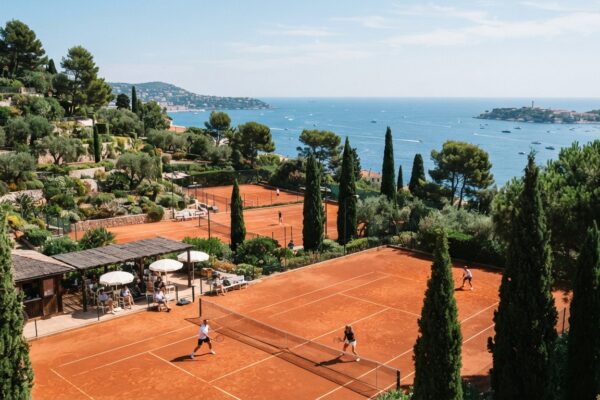


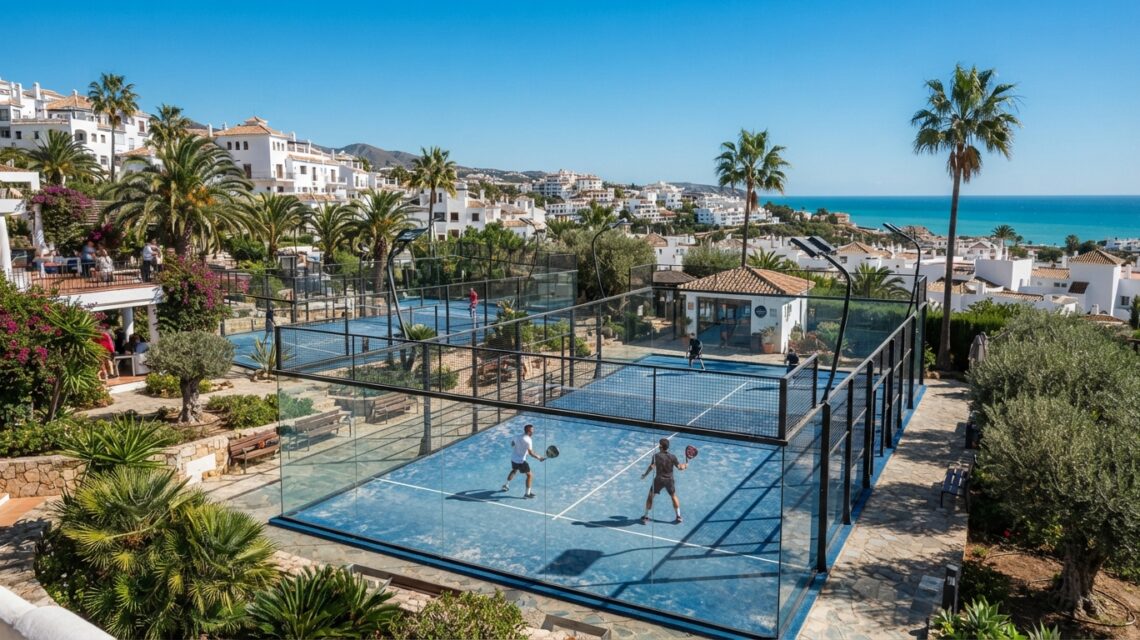
Official Spanish weather data challenge the idea that Marbella is substantially warmer in winter. Alicante offers drier conditions and convenient city transport, while Marbella combines major padel facilities with resort amenities and direct airport buses.
By Marcio Tamer
Updated November 22, 2026
Alicante receives an average of 277 millimeters of rain annually, compared with 534 millimeters at Málaga Airport, according to Spain’s national meteorological agency, AEMET. That difference of 257 millimeters gives Alicante a measurable advantage for travelers planning outdoor padel holidays.
But the weather comparison reveals a surprise. In January, average daytime highs at the two airport stations are virtually identical: 16.7°C in Alicante and 16.8°C in Málaga. The frequently repeated claim that Marbella is consistently two or three degrees warmer than Alicante in winter is not supported by these regional station averages.
The choice between the two destinations therefore depends less on a supposed winter temperature advantage and more on the type of holiday. Alicante offers an accessible coastal city and specialist training options, while Marbella combines prominent padel clubs with luxury hotels, spas, golf and resort dining.
Marbella vs. Alicante for a padel holiday
| Factor | Alicante and Costa Blanca | Marbella and Costa del Sol |
|---|---|---|
| Main airport | Alicante-Elche (ALC) | Málaga-Costa del Sol (AGP) |
| Airport public transport | Direct C-6 bus to Alicante city | Direct Avanza bus to Marbella |
| January average high at regional airport station | 16.7°C | 16.8°C |
| Average annual precipitation | 277 mm | 534 mm |
| Notable training facilities | Bela Padel Center, Ferrero Padel Academy | Nueva Alcántara Club, Puente Romano |
| Holiday atmosphere | Urban beaches, independent hotels, specialist coaching | Resort clubs, beach hotels, golf and nightlife |
| Main logistical challenge | Outlying academies require additional travel | Clubs spread across Marbella and San Pedro |
<text></text>
Climate figures use AEMET’s 1981–2010 reference period. They describe the Alicante and Málaga airport stations rather than conditions at every individual club.
Why Alicante has the clearer dry-weather advantage
AEMET’s records show that Alicante Airport averages just 21 millimeters of rain in January and 20 millimeters in February. Málaga Airport averages 69 and 60 millimeters during those months.
That matters for outdoor padel because rain can interrupt training, especially when a holiday includes only three or four playing days.
The difference is substantial in autumn as well. Alicante Airport averages 46 millimeters of rain in October, compared with 57 millimeters at Málaga Airport. However, Alicante can still experience intense Mediterranean rainfall events, so lower annual totals do not guarantee uninterrupted play.
In summer, both destinations become hot. Alicante Airport’s average daily maximum reaches 30.1°C in July and 30.7°C in August. Málaga Airport averages 30.5°C and 30.8°C, respectively.
Morning or evening coaching sessions are therefore preferable for travelers who want to avoid the hottest hours.
April, May, September and October offer a practical balance between comfortable temperatures and outdoor court availability. Exact conditions depend on the travel dates, and travelers should confirm the club’s rain cancellation policy before booking.
Alicante offers two different kinds of padel holiday
Alicante’s main advantage is that travelers can choose between a city-based break and a dedicated academy experience.
Bela Padel Center is located in the Playa de San Juan area, allowing players to combine padel with accommodation near the beach, restaurants and the city’s public transport network.
The other major option is Ferrero Padel Academy, part of the Juan Carlos Ferrero Equelite training complex in Villena.
This is where the geography becomes important. The academy is not in central Alicante or on Playa de San Juan. Its official website places the complex approximately 50 kilometers from Alicante Airport and 50 kilometers from Alicante city.
Consequently, a traveler booking an intensive program at Villena should consider staying at or near the academy rather than commuting from a coastal hotel every morning.
Ferrero Padel Academy promotes training for different ages and playing levels. Its facilities are designed around a more focused training environment, making it a potential choice for players prioritizing coaching volume over beach access.
For a long weekend based in Alicante city, however, a local club near Playa de San Juan may be more convenient than a distant performance campus.
Marbella combines padel with a stronger resort experience
Marbella’s established clubs demonstrate why it remains attractive to international padel travelers.
Nueva Alcántara Club, in San Pedro de Alcántara, has 16 panoramic outdoor courts, including a central show court. Its published facilities also include a gym, restaurant and spa services.
The club’s own promotional material describes 15 panoramic courts plus one super-panoramic court. It also identifies the M3 Padel Academy among its training offerings.
Puente Romano Tennis Club, on Marbella’s Golden Mile, offers eight illuminated glass padel courts according to its current hotel website. The venue also has tennis courts, a gym, sauna, Turkish bath, restaurant and coaching services.
Some older Puente Romano booking pages still refer to four padel courts. Travelers should rely on the current booking inventory rather than assume every published facility description has been updated.
These clubs appeal to travelers who want padel integrated into a wider holiday. A partner who does not play can enjoy beaches, restaurants and resort amenities without following the same training schedule.
Marbella is not exclusively a luxury destination, however. Its municipal tourism website lists numerous tennis and padel facilities, giving visitors alternatives to the most expensive resort clubs.
Which destination is easier to reach from the airport?
Alicante-Elche Airport connects to Alicante city center through the C-6 bus, which operates throughout the year. The service stops near the railway station and connects with the metropolitan tram network at central locations including Plaza de los Luceros.
This makes an independent holiday possible without renting a car, particularly when the hotel and padel club are accessible by tram, bus or a short taxi ride.
Marbella also has direct airport public transport. Aena confirms that Avanza operates a bus connecting Málaga Airport with Marbella’s bus station.
The difference is what happens after arrival. Marbella’s clubs are spread across the Golden Mile, Nueva Andalucía and San Pedro de Alcántara, so reaching a particular venue may require an additional taxi, local bus or rental car.
Alicante is not automatically easier for every booking. Anyone attending Ferrero Padel Academy in Villena faces a separate inland transfer, regardless of how convenient Alicante’s airport-to-city connection may be.
For both destinations, travelers should check the actual club address before booking accommodation.
Is Alicante really 25% to 40% cheaper than Marbella?
Alicante can offer better value, particularly when comparing independent city hotels with Marbella’s premium resorts. But a universal 25% to 40% saving cannot be established without matching dates, accommodation standards, coaching hours and court booking conditions.
Court rental prices also vary by club, time of day and whether the reservation is for a full court or an individual player.
A €28 court booking shared by four players costs €7 each. A €48 booking costs €12 each. That difference is meaningful over several sessions, but these illustrative prices do not establish verified average rates for either city.
The same problem applies to camp packages. A five-day course with group coaching cannot be compared directly with a resort package that includes accommodation, meals, gym access and private lessons.
A useful budget comparison should separate the following costs: accommodation, coaching, independent court rental, airport transfers and any local transport required between the hotel and club.
For a four-person group, the location of the accommodation may matter as much as the headline coaching price.
Which destination should you book?
Choose Alicante if dry-weather reliability, independent accommodation and access to specialist coaching are the priorities. A city-based stay can work particularly well for a short padel holiday, provided the selected club is close to public transport.
Choose Marbella if the trip combines padel with luxury hotels, resort amenities, restaurants, golf or activities for non-playing companions. Its established clubs provide serious training facilities without requiring visitors to sacrifice the broader holiday experience.
For a dedicated academy week, compare the actual coaching program at Ferrero Padel Academy with available programs in Marbella rather than assuming that one region is inherently more performance-oriented.
Before paying, confirm the number of coached hours, group size, court type, language of instruction, match-play opportunities and rain policy. Also check whether the package includes airport transfers and whether accommodation is genuinely within walking distance of the training venue.
The decisive question is not simply Marbella or Alicante. It is whether the chosen club, hotel and transport arrangements allow more time playing padel and less time traveling between sessions.
+ Siga o Giro no Facebook
+ Siga o Giro no Instagram
Leia Mais: