
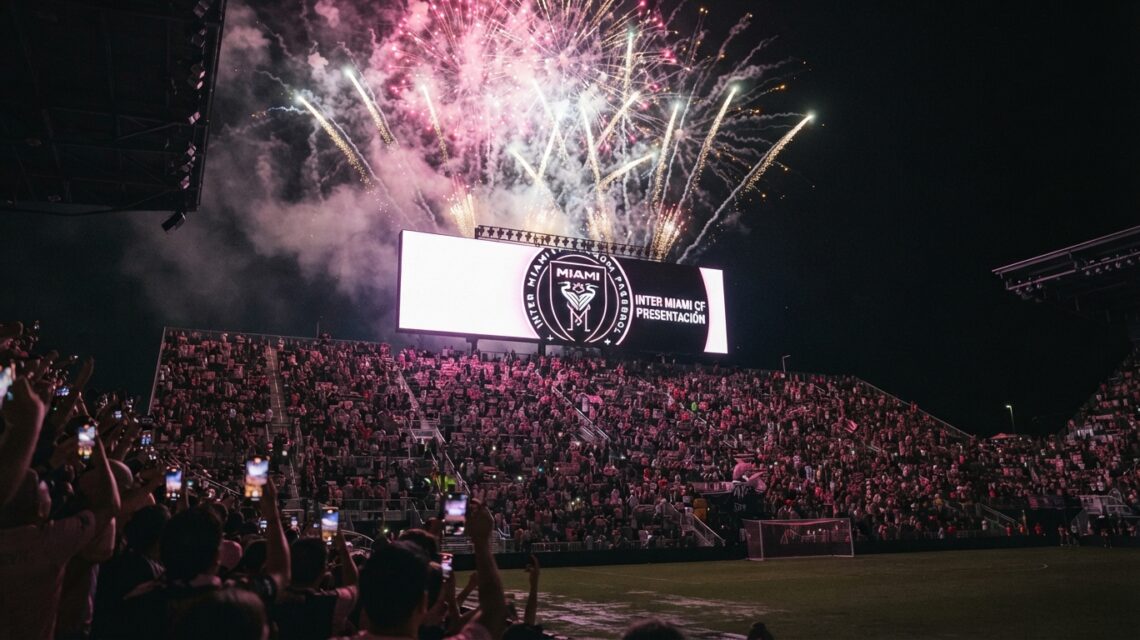
The Argentine superstar transformed a struggling expansion team into Major League Soccer’s most valuable franchise, with $200 million in estimated annual revenue, a historic MLS Cup victory and a new stadium backed by a global sponsorship deal.
By Marcio Tamer
Updated November 9, 2026
Lionel Messi arrived at Inter Miami in July 2023 when the club was valued at approximately $600 million. By February 2026, Forbes estimated its value at $1.35 billion, making it the most valuable franchise in Major League Soccer.
The financial transformation was extraordinary.
Inter Miami generated an estimated $56 million in revenue in 2022, the year before Messi’s arrival. That figure climbed to $118 million in 2023 and $180 million in 2024, according to Forbes.
By the 2026 valuation cycle, the publication estimated annual revenue at $200 million, with operating income of $50 million.
The numbers reveal a business that more than tripled its annual revenue between 2022 and 2024, then continued growing as Messi became the centerpiece of its commercial strategy.
But the most significant development was not simply the increase in revenue.
Inter Miami turned one player’s global popularity into sponsorship agreements, ticket demand, merchandise sales and international exposure that helped support a permanent stadium development.
The sporting results eventually caught up with the commercial success.
On December 6, 2025, Inter Miami defeated Vancouver Whitecaps 3-1 to win its first MLS Cup, with Messi providing two assists and earning the final’s Most Valuable Player award.
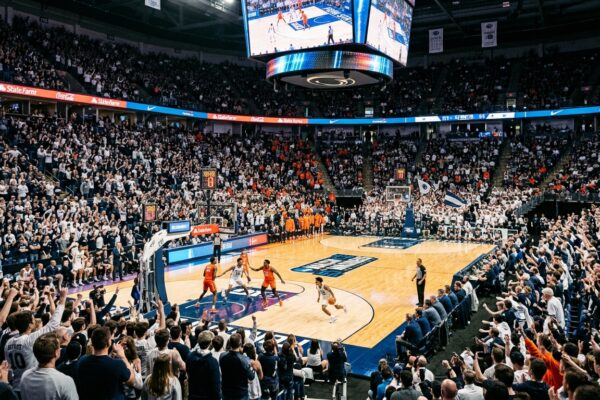
In April 2026, the club opened Nu Stadium, its new 26,700-seat home at Miami Freedom Park.
By then, Messi had already signed a contract extension through the end of the 2028 MLS season.
The original gamble had become a long-term business strategy.
How much was Inter Miami worth before Messi arrived?
Inter Miami began competing in MLS in 2020, entering a league built around centralized commercial arrangements, franchise ownership and salary regulations.
Its ownership group included David Beckham and brothers Jorge and Jose Mas.
Beckham’s involvement gave the new club immediate international recognition, but the team initially struggled to establish itself as a major sporting and commercial force.
The club played its home matches in Fort Lauderdale rather than central Miami.
Its financial scale was also relatively modest compared with established American sports franchises.
Forbes estimated Inter Miami’s value at approximately $600 million in 2023, before the full financial impact of Messi’s arrival became visible.
The publication’s later valuations showed how quickly that changed.
| Forbes valuation cycle | Estimated club value |
|---|---|
| 2023 | Approximately $600 million |
| 2024 | $1.03 billion |
| 2025 | $1.2 billion |
| 2026 | $1.35 billion |
The figures are estimates of enterprise value, not prices paid in completed sales.
They also should not be confused with the club’s annual revenue.
A franchise valuation reflects expectations about future earnings, commercial potential, ownership assets and comparable transactions.
The rise nevertheless illustrates how dramatically investors’ assessment of Inter Miami changed after Messi joined.
Why Messi chose Miami instead of returning to Barcelona
Messi’s arrival followed his departure from Paris Saint-Germain in 2023.
The Argentine had options that included a possible return to Barcelona and a lucrative move to Saudi Arabia.
Inter Miami offered a different proposition.
Rather than relying exclusively on salary, the arrangement combined his playing career with broader commercial opportunities in the United States.
Messi had longstanding relationships with Adidas and other major international brands.
MLS also had a global broadcasting partnership with Apple, creating opportunities to connect his popularity with international audiences.
The commercial arrangements were unusual for a player joining a league whose salary rules differ significantly from those in European football.
But the precise terms were not fully disclosed.
Reports indicated that Messi could benefit from commercial agreements involving Apple and Adidas, alongside an ownership-related arrangement with Inter Miami.
Those reported benefits should not be treated as identical to his guaranteed MLS salary.
They involve different companies, contractual structures and revenue sources.
How much does Messi actually earn at Inter Miami?
In March 2026, Inter Miami managing owner Jorge Mas offered a revealing estimate.
He said Messi’s overall annual compensation was approximately $70 million to $80 million, including the economic value of his ownership-related arrangement.
That was far above the salary figure published by the MLS Players Association.
The difference is important.
MLS salary disclosures cover specified player compensation.
They do not necessarily include separate commercial contracts, endorsements or equity-related benefits.
According to reporting summarized by Sports Business Journal, Messi’s commercial arrangements with Apple and Fanatics were separate from his Inter Miami playing contract.
Any Adidas-related arrangements were also outside the club’s standard salary disclosure.
Mas’s estimate therefore described a broader compensation package.
It was not simply the amount Inter Miami paid Messi in base salary.
That distinction matters when assessing whether the club’s increased revenue was sufficient to support his total economic value.
How Inter Miami’s annual revenue grew after Messi’s arrival
The most concrete evidence of Messi’s commercial impact is the change in Inter Miami’s estimated revenue.
Forbes published the following figures across its annual MLS valuation reports.
| Revenue period | Estimated annual revenue | Change from 2022 |
|---|---|---|
| 2022 | $56 million | Baseline |
| 2023 | $118 million | Approximately 111% higher |
| 2024 | $180 million | Approximately 221% higher |
| 2026 valuation cycle | $200 million | Approximately 257% higher |
The 2026 valuation cycle’s $200 million revenue figure is not necessarily revenue earned during the 2026 calendar year.
Forbes’s financial reporting uses its own reference periods and estimates.
That distinction prevents a common error: presenting the latest valuation-cycle figure as a confirmed audited result for the same calendar year.
The data nevertheless show that Inter Miami became MLS’s highest-revenue club.
The increase was supported by multiple commercial activities.
Those included sponsorships, ticketing, hospitality, merchandise, international exposure and other club-related revenue.
Messi was the central catalyst, but the reported totals cannot be attributed exclusively to him.
The club also expanded its commercial operations, signed additional high-profile players and developed a new stadium.
Why the $200 million revenue figure matters in MLS
Forbes’s February 2026 rankings placed Inter Miami first among MLS clubs by valuation.
Its estimated $200 million in annual revenue also led the league.
The next most valuable franchise, Los Angeles FC, was valued at approximately $1.32 billion, with estimated revenue of $167 million.
That placed Inter Miami ahead of an established club that had previously led the rankings.
The comparison illustrates why Messi’s arrival mattered beyond ticket sales.
MLS clubs operate within a common league structure, but their local commercial opportunities can differ considerably.
Teams with stronger sponsorship demand, premium seating and international recognition can generate revenue advantages.
Inter Miami became an example of how a globally recognized athlete could accelerate those opportunities.
However, the league-wide impact was not uniform.
Forbes noted in 2026 that some MLS franchises were experiencing slower valuation growth and difficult ownership-sale processes.
Messi’s commercial success in Miami did not automatically make every club in the league equally valuable.
What Apple gained from Messi’s arrival
Apple’s relationship with MLS began before Messi signed for Inter Miami.
In 2022, the technology company announced a long-term agreement to distribute MLS matches globally beginning in 2023.
The arrangement was widely reported as carrying a minimum financial commitment of approximately $2.5 billion over 10 years.
The original product, MLS Season Pass, offered matches through the Apple TV app in more than 100 countries and regions.
Messi’s arrival gave Apple an internationally recognizable attraction for that service.
His debut for Inter Miami in July 2023 generated enormous interest, while the club’s matches became some of the most visible events in North American soccer.
The commercial logic was straightforward.
A global star could encourage fans outside the United States to watch a league they had previously followed only occasionally.
But the precise financial effect is difficult to measure.
Apple and MLS have not publicly disclosed complete subscriber totals for every season.
They have also not published the full revenue-sharing arrangements associated with the broadcasting partnership.
Consequently, claims that Messi generated a specific amount of additional subscription revenue should be treated cautiously unless supported by independently verified data.
Why Apple eliminated the separate MLS Season Pass subscription in 2026
The Apple broadcasting arrangement changed significantly before the 2026 season.
In November 2025, Apple and MLS announced that the standalone MLS Season Pass subscription would end.
Beginning in 2026, every MLS match became available to Apple TV subscribers without an additional Season Pass fee.
The change covered regular-season games, the Leagues Cup, the MLS All-Star Game and the MLS Cup playoffs.
This was an important shift in distribution strategy.
Previously, viewers needed to purchase a separate soccer subscription.
Under the new arrangement, MLS became part of Apple’s broader streaming service.
That potentially expanded the audience available to the league.
It also changed the commercial basis on which the product was sold.
The financial terms of the revised arrangement were not fully disclosed.
Therefore, the end of the standalone subscription should not be interpreted as proof that the original service failed or succeeded financially.
It shows that Apple and MLS adjusted their strategy as the league’s audience and streaming market evolved.
How Adidas and Messi’s pink jerseys became a global business
Inter Miami’s pink jersey became one of the most recognizable products in world football after Messi’s arrival.
Adidas was already the official kit supplier for MLS and had a longstanding endorsement relationship with Messi.
That combination created a powerful commercial opportunity.
Fans buying Messi jerseys were purchasing a product associated with the player, the club and the league’s official equipment partner.
Demand expanded far beyond South Florida.
Forbes reported that Inter Miami’s jersey sales rose to the top of global sports merchandise rankings following Messi’s arrival.
But the economics of those sales are more complicated than the retail price.
Revenue from a jersey can be divided among retailers, manufacturers, licensing entities, clubs and other contractual participants.
The precise percentages depend on private agreements.
Reports have described Messi’s commercial relationship with Adidas as part of the wider financial structure surrounding his move.
However, the complete terms have not been made public.
It would therefore be misleading to claim that Messi receives a confirmed percentage of every Inter Miami jersey sold.
The commercial impact is clear.
The exact allocation of profits is not.
Why Royal Caribbean and JPMorgan Chase invested in Inter Miami
The club’s growing profile attracted major corporate partners.
Royal Caribbean became Inter Miami’s front-of-shirt sponsor beginning with the 2024 season.
The cruise company replaced XBTO on the team’s primary jersey sponsorship position.
The partnership linked two brands with strong connections to South Florida and international customers.
JPMorgan Chase also entered into a major commercial agreement with the club.
In February 2024, the bank secured naming rights to Inter Miami’s stadium in Fort Lauderdale.
The venue became Chase Stadium.
That arrangement was particularly notable because JPMorgan Chase had an extensive portfolio of American sports partnerships but had not previously held naming rights to a professional soccer stadium.
These agreements demonstrate how Messi’s arrival expanded Inter Miami’s appeal to companies seeking audiences beyond traditional MLS supporters.
The club was no longer marketing itself only as a local soccer franchise.
It had become a platform for international brand exposure.
Why Inter Miami raised ticket prices after Messi arrived
Messi’s arrival created immediate demand for match tickets.
Inter Miami responded with substantial price increases for the 2024 season.
Some season-ticket holders faced increases exceeding 100%, depending on their seating category.
Premium locations experienced especially sharp adjustments.
The club also sold out its available season-ticket inventory.
That reflected a major change in the economics of attending Inter Miami matches.
Before Messi’s arrival, the club had struggled to generate comparable demand.
After his signing, access to home games became a scarce commercial product.
But higher ticket prices also created tension with supporters.
Some longtime fans criticized the cost of renewing their seats.
The club had to balance maximizing revenue against maintaining access for its existing fan base.
This trade-off became more significant as Inter Miami prepared to move into a larger permanent stadium.
The new stadium created another source of revenue
Inter Miami’s stadium strategy began before Messi joined.
The club had long planned to move from Fort Lauderdale to a permanent home in Miami.
Construction of Miami Freedom Park began in 2023.
The development includes a stadium, commercial facilities, hospitality areas, public spaces and other entertainment infrastructure.
The stadium opened on April 4, 2026, when Inter Miami hosted Austin FC.
The new venue has a capacity of approximately 26,700 spectators.
That is larger than the club’s previous home and includes a wider range of premium hospitality options.
Those facilities can generate revenue beyond ordinary ticket sales.
Luxury suites, club seating, corporate events and hospitality packages typically command higher prices.
The stadium also gives Inter Miami greater control over its long-term commercial environment.
However, the development’s economics depend on construction costs, financing, operating expenses and the performance of surrounding businesses.
A new stadium creates opportunities.
It does not guarantee that every investment will produce the expected return.
Nubank replaced Chase as the stadium naming-rights partner
The move to Miami Freedom Park also introduced a new major sponsor.
In March 2026, Inter Miami announced a multiyear partnership with Nu, the financial services brand associated with Nubank.
The agreement gave the new stadium its official name: Nu Stadium.
The partnership was particularly significant because Nu was expanding its international presence, including ambitions in the United States.
The company had approximately 131 million customers across Brazil, Mexico and Colombia at the time of the announcement.
The stadium agreement also included branded hospitality and public spaces.
Nu Club, a premium lounge for approximately 770 guests, became one of the venue’s signature commercial areas.
Nu Plaza was designed as a gathering space within the wider development.
The arrangement illustrates how Inter Miami used its global visibility to attract a sponsor seeking exposure beyond the traditional American banking market.
The financial terms were not publicly disclosed.
It is therefore not possible to calculate the exact annual value of the naming-rights agreement from the announcement alone.
Messi’s sporting success helped justify the investment
Inter Miami’s commercial growth was initially much faster than its sporting progress.
Messi helped the club win the 2023 Leagues Cup shortly after arriving.
In 2024, Miami won the Supporters’ Shield after setting a then-record 74 points in the MLS regular season.
But the club was eliminated from the playoffs before reaching the MLS Cup final.
The breakthrough came in 2025.
Inter Miami defeated Vancouver Whitecaps 3-1 to win its first MLS Cup.
Messi contributed two assists in the final and was named the match’s Most Valuable Player.
The victory gave the club a championship that matched its commercial ambitions.
It also reinforced the value of retaining Messi as the face of the organization.
In October 2025, Inter Miami announced that he had extended his contract through 2028.
The agreement connected his future with the club’s new stadium and its next phase of commercial expansion.
Why Messi’s contract extension matters financially
Messi’s original arrival created a surge in attention.
But short-term popularity does not automatically produce a sustainable business.
For Inter Miami, the challenge was to convert that attention into longer-term relationships.
The contract extension through 2028 reduced uncertainty about the club’s most important commercial asset.
Sponsors could plan campaigns around his continued presence.
Season-ticket buyers had greater confidence that Messi would remain associated with the team.
The club could also market its new stadium with the expectation that he would continue playing there.
That does not eliminate sporting or commercial risk.
Messi will be 41 during the 2028 season.
His availability, playing time and performance cannot be guaranteed.
But the extension provided a clearer planning horizon than a contract approaching expiration.
The club’s task is to use that period to develop a brand capable of remaining valuable after Messi eventually retires.
What the Messi effect actually changed
| Business measure | Before Messi | Latest reported position |
|---|---|---|
| Forbes estimated franchise value | Approximately $600m in 2023 | $1.35bn in 2026 |
| Annual revenue | $56m in 2022 | $200m in Forbes’s 2026 valuation cycle |
| MLS valuation ranking | Outside the top position | No. 1 in 2026 |
| Stadium | Temporary home in Fort Lauderdale | 26,700-seat Nu Stadium in Miami |
| Primary shirt sponsor | XBTO | Royal Caribbean |
| Stadium naming-rights partner | Previous temporary venue arrangements | Nu at Miami Freedom Park |
| Major sporting achievement | No MLS Cup title | 2025 MLS Cup champion |
| Messi’s contract | Joined in 2023 | Extended through 2028 |
The figures show how dramatically Inter Miami changed.
But they describe different types of value.
Revenue is money generated through operations.
Operating income is a measure of profitability before specified costs.
Franchise valuation is an estimate of what the business is worth.
A sponsorship agreement creates commercial rights and obligations.
And a player’s total compensation may include benefits outside the club’s published salary figures.
These distinctions are essential to understanding the financial scale of the Messi effect.
Why the Messi effect is difficult to reproduce
Inter Miami’s strategy worked because several unusual conditions came together.
Messi was already one of the most recognizable athletes in the world.
He arrived after winning the 2022 World Cup with Argentina.
He joined a club in a major international market with strong connections to Latin America.
The ownership group included David Beckham, who understood the commercial potential of global soccer stars in the United States.
MLS had also recently launched a worldwide streaming partnership with Apple.
Adidas, Royal Caribbean and other sponsors could build campaigns around a player whose popularity extended far beyond North America.
Most MLS clubs cannot reproduce that combination simply by signing an expensive international player.
The Messi effect was not a universal formula.
It was the result of a specific athlete, market, ownership group and commercial environment.
The wider league benefited from increased attention, but individual franchises still faced their own financial and sporting challenges.
What happens when Messi eventually leaves?
By November 2026, Inter Miami had already moved beyond its original expansion-club identity.
It had won the MLS Cup, opened a permanent stadium and become the league’s most valuable franchise according to Forbes.
Messi’s contract extension gave the organization until the end of 2028 to continue building around its biggest star.
The next financial challenge is more difficult.
Inter Miami must maintain commercial demand when Messi is no longer on the field.
That will depend on developing other recognizable players, sustaining competitive success, maintaining sponsor relationships and attracting supporters to Nu Stadium.
The club’s estimated $1.35 billion valuation reflects expectations about those future opportunities.
It is not a guarantee that revenue will keep rising.
Messi helped turn Inter Miami into MLS’s most valuable club. The next test is whether the business can remain that valuable without him.
+ Siga o Giro no Facebook
+ Siga o Giro no Instagram
Leia Mais: