

Ford wanted a buyer willing to invest more than £200 million in three years. Red Bull acquired the factory, bought a second team to develop drivers and eventually won 14 world championships across two generations of stars.
By Marcio Tamer
Updated November 3, 2026
On November 15, 2004, Ford confirmed the sale of Jaguar Racing to Red Bull, ending the American manufacturer’s troubled Formula 1 project.
The reported purchase price was extraordinary: just $1.
But the nominal figure, widely repeated in accounts of the transaction, was never publicly confirmed as the definitive price. The sale terms were confidential, and contemporary reports described the dollar amount as speculation.
The more consequential financial commitment was much larger.
Ford wanted a buyer prepared to invest more than £200 million over the following three years, ensuring that the team could continue operating rather than disappear from the championship.
Red Bull, led by Austrian billionaire Dietrich Mateschitz, accepted the challenge.
Ten months later, the energy drink company bought Minardi, an Italian team struggling to survive on one of Formula 1’s smallest budgets.
The second acquisition was reported to be worth approximately $35 million, although the official purchase price was not disclosed.
Together, the deals gave Red Bull something unusual: two Formula 1 teams, four race seats and a direct route for developing young drivers.
The results took time.
Red Bull Racing did not win its first Grand Prix until 2009. But between 2010 and 2024, the team captured six Constructors’ Championships and eight Drivers’ Championships.
By November 2025, Forbes estimated Red Bull Racing’s enterprise value at $4.35 billion.
The transformation was not simply the result of buying a distressed team cheaply.
Red Bull had acquired the infrastructure to become a serious constructor, then created a second organization to identify, train and promote the drivers who could win championships.
That combination became one of the most successful long-term investments in Formula 1 history.
Why Ford decided to abandon Jaguar Racing
Ford’s Formula 1 involvement was not a minor sponsorship project.
The American manufacturer had a long history in the championship through its association with Cosworth engines.
In 1999, Ford acquired Stewart Grand Prix, the team founded by former world champion Jackie Stewart and his son Paul.
The operation was rebranded as Jaguar Racing for the 2000 season.
Ford hoped the Jaguar name would benefit from Formula 1’s international prestige.
The strategy connected a luxury automotive brand with a glamorous global sport.
But the sporting results were disappointing.
Between 2000 and 2004, Jaguar Racing failed to win a Grand Prix.
The team achieved only two podium finishes, both with Eddie Irvine.
Despite substantial investment, it remained a midfield competitor.
The financial burden became increasingly difficult to justify.
Formula 1 required expensive research, development, engineering and logistics.
Ford was also facing pressure to control costs within its wider automotive business.
In September 2004, the company announced that it would withdraw from Formula 1 at the end of the season.
Jaguar Racing was placed up for sale.
Ford also moved to dispose of its Cosworth racing engine business.
The decision created a potential crisis for Formula 1.
If Jaguar disappeared, the championship would lose another established team.
Hundreds of jobs at the team’s Milton Keynes base were at risk.
For Red Bull, however, the withdrawal created an opportunity.
The $1 purchase price concealed the real financial commitment
The story of Red Bull buying Jaguar Racing for $1 has become one of Formula 1’s most famous business anecdotes.
It suggests that Mateschitz acquired a valuable racing team for almost nothing.
But the evidence is more complicated.
Contemporary reporting by Autosport stated that the purchase terms were confidential.
Other reports described the $1 price as a rumor.
Ford’s central concern was not maximizing the immediate sale proceeds.
It wanted a buyer capable of sustaining the team.
According to Autosport, Ford required assurances that the new owner would invest more than £200 million over three years.
That commitment was the economically significant part of the transaction.
A Formula 1 team is expensive to operate even when its shares are transferred for a nominal amount.
The new owner must fund staff salaries, car development, engines, facilities, travel and other costs.
Red Bull also inherited the challenge of turning an unsuccessful team into a competitive organization.
The reported $1 figure therefore should not be interpreted as the complete acquisition cost.
The transaction involved substantial future financial obligations.
The value of the deal lay in the assets Red Bull acquired and the investments it was prepared to make afterward.
Red Bull acquired a factory, engineers and an existing Formula 1 entry
Building a Formula 1 team from scratch would have required enormous expenditure.
Red Bull avoided much of that process by purchasing Jaguar Racing as an operating business.
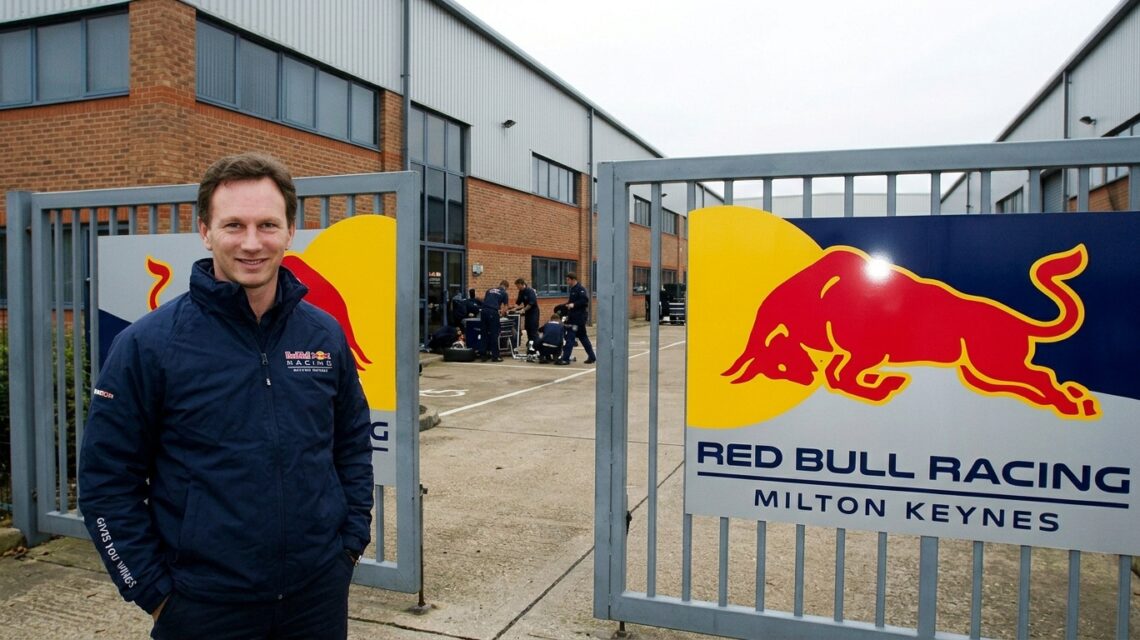
The acquisition included the team’s established base in Milton Keynes, England.
It also provided access to experienced engineers, mechanics, designers and management personnel.
The workforce numbered approximately 300 people at the time of the sale.
The organization already possessed the facilities needed to design, manufacture and operate Formula 1 cars.
It also had an established place on the championship grid.
That infrastructure was more valuable than the symbolic purchase price suggested.
A new entrant would have needed to recruit personnel, establish a factory and develop technical systems.
Red Bull could instead begin competing almost immediately.
The team entered the 2005 season as Red Bull Racing.
It retained Cosworth engines for its first year.
David Coulthard joined as an experienced driver, while Christian Klien and Vitantonio Liuzzi also competed for the team.
Christian Horner was appointed team principal.
The new organization finished seventh in the Constructors’ Championship.
It was not yet a title contender.
But Red Bull had established itself as a permanent Formula 1 competitor.
Why Red Bull wanted to own a team instead of sponsoring one
Red Bull had been involved in Formula 1 before buying Jaguar.
The company sponsored drivers and teams, including Sauber.
It had also developed a junior driver program.
Sponsorship provided visibility.
The Red Bull logo appeared on cars, helmets and promotional material.
But sponsorship did not provide full control over a team’s identity or strategy.
Ownership offered a different commercial opportunity.
Red Bull could determine the team’s branding.
It could control marketing activities.
It could influence driver selection.
It could build an organization around the company’s identity.
That was especially attractive because Red Bull was not a traditional automotive manufacturer.
Ferrari, Mercedes and Renault could connect Formula 1 participation to their road-car businesses.
Red Bull sold energy drinks.
Its commercial objective was therefore different.
The company wanted to associate its brand with speed, risk, youth and high-performance competition.
Owning a Formula 1 team created a platform for that message.
It also allowed Red Bull to generate publicity through sporting success rather than relying solely on conventional advertising.
A Stanford Graduate School of Business case study published in 2007 examined precisely this strategic question: whether Red Bull should sponsor Formula 1 teams or own one.
The acquisition represented a decision to move from purchasing advertising exposure to controlling a global sporting asset.
The Minardi purchase gave Red Bull four Formula 1 race seats
On September 10, 2005, Red Bull agreed to buy Minardi from Australian businessman Paul Stoddart.
The deal was completed in November.
Contemporary reports estimated the purchase price at approximately $35 million.
Minardi had competed in Formula 1 since 1985.
The team was based in Faenza, Italy.
It had a loyal following and a reputation for surviving despite limited financial resources.
But it rarely challenged for points.
Its budget was substantially smaller than those of leading teams.
Stoddart had struggled to secure the funding needed to keep the operation competitive.
Red Bull offered a route to financial stability.
The company agreed to maintain the team’s Italian base.
For Red Bull, the acquisition solved a different problem.
The company had more promising young drivers than available seats.
Its junior program was producing talent.
But Red Bull Racing had only two race seats.
Buying Minardi doubled the number of Formula 1 seats under Red Bull ownership.
It created a second team that could provide racing experience to younger drivers.
The strategy was not simply about adding another brand to the grid.
It was about building a talent-development system inside Formula 1 itself.
Toro Rosso became a training ground, but remained a separate constructor
Minardi was renamed Scuderia Toro Rosso for the 2006 season.
The name means Red Bull Racing in Italian.
The team remained based in Faenza.
Its purpose was to develop young drivers who might eventually move to the senior Red Bull Racing operation.
But Toro Rosso was not a reserve squad in the conventional sense.
It competed in the Formula 1 World Championship as a separate constructor.
It entered its own cars.
It scored its own championship points.
It operated under the same sporting and technical regulations as other teams.
The distinction was important because Formula 1 rules restricted the sharing of complete car designs between constructors.
Red Bull could coordinate certain activities and use common resources where regulations permitted.
But the two teams could not simply enter identical cars under different names without regard to the rules.
The arrangement evolved as Formula 1’s technical regulations changed.
Toro Rosso eventually developed a more independent design structure.
The second team gave Red Bull valuable flexibility.
It could promote drivers when they were ready.
It could also move drivers between the organizations based on performance.
That flexibility became central to the careers of Sebastian Vettel and Max Verstappen.
Sebastian Vettel proved the two-team strategy could produce champions
Sebastian Vettel joined Toro Rosso during the 2007 season.
He had previously made his Formula 1 debut with BMW Sauber.
At Toro Rosso, he gained the opportunity to compete regularly.
In 2008, Vettel delivered a result that transformed the team’s reputation.
At the Italian Grand Prix, held in wet conditions at Monza, he secured pole position and won the race.
It was Toro Rosso’s first Formula 1 victory.
It was also a landmark for Red Bull’s driver-development strategy.
The junior team had won a Grand Prix before the senior Red Bull Racing operation.
Vettel moved to Red Bull Racing for the 2009 season.
That year, he won the Chinese Grand Prix.
It was the senior team’s first Formula 1 victory.
Red Bull finished second in the Constructors’ Championship.
The team had moved from midfield competitor to genuine title challenger.
In 2010, Vettel won his first Drivers’ Championship.
Red Bull also secured its first Constructors’ Championship.
The team repeated the double in 2011, 2012 and 2013.
Four consecutive championship doubles established Red Bull as one of Formula 1’s dominant organizations.
The pathway from Toro Rosso to Red Bull Racing had delivered exactly the kind of result Mateschitz envisioned.
Adrian Newey turned financial resources into competitive cars
Driver development was only one part of Red Bull’s strategy.
The company also needed technical leadership capable of producing championship-winning cars.
One of its most important decisions came in 2005, when it announced that Adrian Newey would join the team.
Newey had already established himself as one of Formula 1’s leading designers.
He had contributed to championship-winning cars at Williams and McLaren.
He joined Red Bull in early 2006.
His arrival signaled that the company intended to compete at the highest level.
Red Bull was not satisfied with using Formula 1 primarily as a marketing platform.
It wanted to win races and championships.
Newey’s aerodynamic expertise became central to that ambition.
The team gradually improved.
Its first victory arrived in 2009.
The championship breakthrough followed in 2010.
Newey played a major role in the design philosophy that helped Red Bull dominate from 2010 through 2013.
But the success was not the work of one person.
It depended on a broader engineering organization, management structure, drivers and technical partnerships.
Red Bull’s investment made it possible to recruit and retain that expertise.
The acquisition of Jaguar had provided the foundation.
The subsequent spending built a championship-winning operation.
Max Verstappen became the second great success of the junior-team model
Red Bull’s driver-development strategy produced another defining success with Max Verstappen.
The Dutch driver joined Toro Rosso in 2015 at the age of 17.
He became the youngest driver to start a Formula 1 Grand Prix.
His rapid development attracted attention throughout the championship.
In 2016, Red Bull promoted him to the senior team.
He replaced Daniil Kvyat ahead of the Spanish Grand Prix.
Verstappen won the race on his Red Bull Racing debut.
He became the youngest Grand Prix winner in Formula 1 history.
The promotion demonstrated the flexibility of Red Bull’s two-team structure.
The company could move a promising driver into a competitive seat without negotiating a transfer from an unrelated constructor.
It also had another team available for drivers who needed more experience.
Verstappen eventually became the central figure in Red Bull’s second championship era.
He won four consecutive Drivers’ Championships from 2021 through 2024.
Red Bull also won the Constructors’ Championship in 2022 and 2023.
The team had produced two separate periods of dominance with drivers developed through its wider organization.
That was one of the strongest arguments for the long-term value of the Minardi acquisition.
Red Bull’s two-team system did not guarantee every driver would succeed
The junior-team strategy produced major successes.
But it also created intense pressure.
Drivers were evaluated against one another.
Promotions and demotions could occur quickly.
Some promising talents struggled after moving to the senior team.
Others built successful careers elsewhere.
Daniel Ricciardo progressed through Toro Rosso before joining Red Bull Racing.
He won seven Grands Prix with the senior team.
Carlos Sainz also developed through Toro Rosso.
He later established himself as a Grand Prix winner with Ferrari.
Pierre Gasly won the 2020 Italian Grand Prix with AlphaTauri, the later name of the former Minardi operation.
But several drivers experienced difficult transitions.
Daniil Kvyat, Gasly and Alexander Albon all faced challenges during their time in the senior Red Bull team.
The system offered opportunities.
It also exposed drivers to unusually direct competition for a limited number of seats.
That made Red Bull’s talent-development model both productive and controversial.
The company could identify exceptional drivers.
But the pathway was demanding, and not every promotion succeeded.
The Minardi team became Racing Bulls after several rebrandings
The former Minardi operation has changed names several times since Red Bull acquired it.
It competed as Toro Rosso from 2006 through 2019.
In 2020, it became AlphaTauri, reflecting Red Bull’s fashion brand.
The team was renamed RB for the 2024 season.
In 2025, it adopted the Racing Bulls identity.
As of November 2026, it competes as Visa Cash App Racing Bulls.
The team remains based in Faenza, Italy.
Its role has evolved.
It continues to provide opportunities for younger drivers.
But it also operates as a competitive Formula 1 constructor with its own sporting objectives.
The organization has produced race winners and helped develop drivers who later competed for leading teams.
Its history demonstrates that Red Bull’s second acquisition was not simply a short-term marketing exercise.
The company retained the operation through multiple regulatory and commercial eras.
The original Minardi factory became part of a long-term Formula 1 structure.
The 2026 Ford partnership brought the story back to its beginning
There is an unusual symmetry in Red Bull’s history.
In 2004, Ford sold Jaguar Racing because it wanted to leave Formula 1.
In 2026, Ford returned to the championship through a technical partnership with Red Bull Powertrains.
The arrangement supports Red Bull’s new power-unit program.
Both Red Bull Racing and Racing Bulls use Red Bull Ford power units in the 2026 season.
The partnership represents a major change in the organization’s technical strategy.
Red Bull is no longer simply a team purchasing engines from an established manufacturer.
It has developed its own power-unit operation, supported by Ford.
The project reflects the company’s growth since the Jaguar acquisition.
Red Bull originally bought an existing Formula 1 team to gain access to the championship.
More than two decades later, it has become an organization capable of developing both racing cars and power units.
The company that once depended on Ford’s decision to sell now collaborates with the same manufacturer on a new generation of Formula 1 technology.
How much is Red Bull Racing worth today?
The financial value of Red Bull Racing has increased dramatically.
In November 2025, Forbes estimated the team’s enterprise value at $4.35 billion.
That placed Red Bull among Formula 1’s most valuable teams.
The valuation was based on financial information, industry interviews and comparable transactions.
It was not an actual sale price.
Red Bull Racing had not been sold for $4.35 billion.
The figure represented an estimate of what the operating business might be worth.
It also referred to Red Bull Racing, not the combined value of every Red Bull-owned motorsport business.
The estimate therefore should not be interpreted as the value of the original Jaguar and Minardi acquisitions together.
The comparison nevertheless demonstrates the scale of the transformation.
In 2004, Ford wanted to exit Formula 1 and sought a buyer willing to fund Jaguar Racing.
By 2025, Red Bull Racing had become a multibillion-dollar sports property.
The change reflected sporting success, commercial growth and the rising value of Formula 1 franchises.
It also reflected the championship’s modern financial structure, including the cost cap and more stable commercial arrangements.
Red Bull Racing generated £379.6 million in revenue in 2025
The latest financial accounts provide another measure of the business.
According to Companies House filings reported in October 2026, Red Bull Racing Ltd generated approximately £379.6 million in turnover during 2025.
That compared with approximately £314.4 million in 2024.
Revenue increased by about 20.7%.
The company reported an after-tax profit of approximately £9.38 million.
That was higher than the previous year’s profit of approximately £1.68 million.
The figures demonstrate that Red Bull Racing operates as a substantial commercial business.
But they require careful interpretation.
The accounts relate to a specific legal entity.
They do not necessarily include every activity within the wider Red Bull Formula 1 organization.
The team’s revenue is also not equivalent to the parent energy drink company’s revenue.
Red Bull Racing generates income through sponsorship, Formula 1 commercial distributions and other activities.
The energy drink company benefits from brand exposure and marketing association.
Those are related but distinct financial effects.
The racing team’s accounting profit therefore does not measure the complete commercial return Red Bull receives from Formula 1.
The financial transformation in numbers
| Milestone | Figure |
|---|---|
| Ford announces Formula 1 withdrawal | September 2004 |
| Red Bull acquires Jaguar Racing | November 2004 |
| Rumored Jaguar purchase price | $1, unconfirmed |
| Reported investment commitment sought by Ford | More than £200 million over three years |
| Jaguar Racing workforce at acquisition | Approximately 300 |
| Red Bull Racing Formula 1 debut | 2005 |
| Red Bull acquires Minardi | September 2005 |
| Reported Minardi purchase price | Approximately $35 million |
| Minardi becomes Toro Rosso | 2006 |
| Adrian Newey joins Red Bull | 2006 |
| Toro Rosso’s first victory | 2008 Italian Grand Prix |
| Red Bull Racing’s first victory | 2009 Chinese Grand Prix |
| First Constructors’ Championship | 2010 |
| Consecutive title doubles with Vettel | 2010-2013 |
| Verstappen’s first Red Bull victory | 2016 Spanish Grand Prix |
| Constructors’ Championships through 2025 | 6 |
| Drivers’ Championships through 2025 | 8 |
| Forbes’ 2025 Red Bull Racing valuation | $4.35 billion |
| Red Bull Racing Ltd turnover in 2025 | £379.6 million |
| Red Bull Racing Ltd after-tax profit in 2025 | £9.38 million |
| Red Bull Ford power-unit partnership begins | 2026 |
The figures show how the business evolved.
The Jaguar acquisition provided the infrastructure.
The Minardi purchase created a second route for developing drivers.
Technical investment turned the senior team into a championship contender.
And Formula 1’s broader commercial growth increased the value of the franchise.
The process took years.
It was not an instant transformation produced by a nominal purchase price.
Red Bull’s success was also a marketing strategy
Red Bull’s Formula 1 investment differed from the traditional objectives of automotive manufacturers.
The company did not need to sell road cars.
It wanted to strengthen a global consumer brand.
Formula 1 offered an unusually attractive platform.
The championship traveled across multiple continents.
Its audiences followed elite drivers and high-performance technology.
Its commercial environment attracted major sponsors and international media attention.
Red Bull could connect those associations to its energy drink business.
The team also developed a distinctive identity.
It used unconventional marketing, high-profile events and a less formal public image than many traditional Formula 1 organizations.
That approach helped differentiate Red Bull from established manufacturers.
But the strategy became more powerful as the team began winning.
Championship success generated sustained international exposure.
The Red Bull name appeared in race results, news coverage and historical records.
The company therefore gained more than conventional advertising impressions.
It became associated with competitive achievement.
The value of that association is difficult to calculate precisely.
Red Bull has not published a comprehensive financial model proving that Formula 1 directly generated a specific amount of incremental beverage sales.
The commercial logic is clear.
The exact financial return is not publicly established.
The investment also carried risks that the $1 story obscures
The Jaguar acquisition is often presented as a brilliant bargain.
But it was not risk-free.
Red Bull committed to operating an expensive Formula 1 team.
It inherited a workforce and infrastructure that required substantial ongoing funding.
It needed to improve a car that had struggled to compete.
It also had to recruit technical leadership and develop a long-term strategy.
The Minardi acquisition added another set of costs.
Two teams meant two organizations, two race entries and additional personnel.
The strategy could have failed.
If Red Bull Racing had remained a midfield team, the company might have spent hundreds of millions without achieving championship success.
If the junior program had failed to produce elite drivers, the second team might have delivered limited sporting value.
The eventual success should not obscure the uncertainty that existed in 2004 and 2005.
The acquisitions created opportunities.
They did not guarantee titles.
Red Bull’s advantage came from combining financial commitment with effective technical and sporting decisions.
The two-team structure became Red Bull’s greatest competitive advantage
The Jaguar purchase gave Red Bull a Formula 1 team.
The Minardi purchase gave it a system.
That distinction explains why the second acquisition was so important.
A single team could compete for victories and championships.
But a second team allowed Red Bull to develop drivers, evaluate talent and create promotion opportunities within its own organization.
Vettel demonstrated the model’s potential.
He won for Toro Rosso in 2008, moved to Red Bull Racing in 2009 and became a four-time world champion.
Verstappen followed a similar route.
He debuted with Toro Rosso in 2015, moved to Red Bull Racing in 2016 and became a four-time world champion.
The two drivers accounted for all eight of Red Bull Racing’s Drivers’ Championships through 2025.
Their careers illustrate the long-term value of controlling a driver-development pathway.
The strategy also helped Red Bull reduce dependence on recruiting established stars from rival teams.
It could identify talent early and promote drivers when opportunities emerged.
That did not eliminate mistakes.
But it created a competitive advantage that extended beyond the performance of any individual car.
The real return was much larger than a symbolic purchase price
Red Bull’s transformation of Jaguar Racing into a championship-winning organization is one of Formula 1’s most remarkable business stories.
The rumored $1 purchase price made the deal famous.
But the financial commitment was far greater.
Ford wanted a buyer prepared to invest more than £200 million over three years.
Red Bull accepted that obligation and continued investing.
It then acquired Minardi for a reported $35 million.
The company built a two-team structure, recruited leading engineers and developed a pipeline of drivers.
The sporting results included six Constructors’ Championships and eight Drivers’ Championships through 2025.
The commercial results included a team valued by Forbes at $4.35 billion.
Those outcomes were not guaranteed in 2004.
They emerged from more than two decades of investment, management decisions and Formula 1’s expanding commercial value.
The most revealing part of the story is therefore not that Red Bull supposedly bought a Formula 1 team for $1.
It is that the company recognized the value of acquiring an existing racing organization, then used a second acquisition to build an internal system for producing champions.
Jaguar provided the factory.
Minardi provided the development pathway.
Together, they became the foundation of a multibillion-dollar Formula 1 business.
+ Siga o Giro no Facebook
+ Siga o Giro no Instagram
Leia Mais: