

Behind the Olympic success of a country with roughly 16 million people was State Plan 14.25, a government-controlled system involving anabolic steroids, secret medical research and athletes who were sometimes too young to understand what they were being given. Decades later, survivors are still confronting the consequences.
By Marcio Tamer
Updated October 26, 2026
At the 1976 Montreal Olympics, East Germany won 40 gold medals, finishing second in the gold-medal table behind the Soviet Union and ahead of the United States.
The result was extraordinary for a country with approximately 16 million inhabitants.
East German women won 11 of the 13 swimming events, a level of dominance that raised questions about how such a relatively small nation had become an Olympic superpower.
The answer was partly found in a highly organized system of sports schools, scientific training and state investment. But behind that system was something far more disturbing.
East German authorities had established a secret program that supplied anabolic steroids and other performance-enhancing substances to elite athletes, including minors, often without their informed consent.
The program became formally organized under State Plan 14.25, approved in 1974, although doping research and drug administration had begun years earlier.
Its purpose was not simply to improve athletic performance. It was to produce international sporting success while keeping the use of prohibited substances hidden from competitors, anti-doping authorities and, in many cases, the athletes themselves.
After German reunification, surviving state documents helped expose the scale of the operation.
Historical and medical research has estimated that between 10,000 and 15,000 people were affected by East Germany’s coercive doping system.
Some former athletes later reported reproductive problems, hormonal disorders, liver damage and lasting psychological harm.
The medals remain part of Olympic history. But the records uncovered after 1990 reveal a different story behind many of those performances: a government that treated athletes’ bodies as instruments of national prestige.
Why East Germany invested so heavily in Olympic medals
The German Democratic Republic, commonly known as East Germany, was established in 1949 and existed until German reunification in 1990.
During the Cold War, international sport became a highly visible arena of competition between socialist and capitalist states.
Olympic success offered East Germany a way to demonstrate its achievements before a global audience.
The country’s political leadership regarded medals as evidence that its system of education, scientific research and athletic development could compete with much larger nations.
Sports policy therefore received substantial government attention.
Promising children were identified through schools and directed toward specialized training programs.
Elite athletes received access to coaching, facilities, medical supervision and opportunities that were not available to most citizens.
This system produced genuine athletic expertise and organizational advantages.
But it also created an environment in which individual athletes had limited control over decisions affecting their bodies.
The government could influence selection, training, medical treatment and access to international competition.
As Olympic success became increasingly important to the country’s international image, the pressure to deliver medals intensified.
Performance-enhancing drugs became part of that strategy.
The doping system began before State Plan 14.25
One important historical distinction is often missed.
East Germany did not suddenly begin doping athletes in 1974.
Research published by Werner Franke and Brigitte Berendonk in the scientific journal Clinical Chemistry documented government-supported doping research and administration dating back to 1966.
The program evolved through the late 1960s and early 1970s.
By 1974, authorities had formalized a centrally coordinated research and doping operation under State Plan 14.25.
The plan connected scientific institutions, sports officials, physicians and pharmaceutical manufacturers.
Its objective was to improve athletic performance through pharmacological intervention while reducing the risk of detection.
The program’s existence was classified.
Its terminology also helped conceal its purpose.
Officials used expressions such as supporting substances or supporting measures rather than openly describing the administration of anabolic steroids.
That language allowed the doping operation to be presented internally as a component of sports science.
But the substances involved could alter hormonal development, muscle growth and other biological processes.
For young athletes, the risks were particularly serious.
What State Plan 14.25 actually involved
State Plan 14.25 was not a single drug or a simple instruction to take steroids.
It was a government-directed system of research, distribution, monitoring and secrecy.
The operation involved several institutions, including the Research Institute for Physical Culture and Sport in Leipzig, commonly known by its German abbreviation FKS.
Sports medicine officials and pharmaceutical manufacturers participated in research concerning the effects of different substances on athletic performance.
Doctors and coaches administered drugs according to training schedules and competitive objectives.
Scientific personnel studied their effects.
Officials also investigated how substances could be detected in anti-doping tests and how testing procedures might be circumvented.
The Ministry for State Security, better known as the Stasi, helped protect the program’s secrecy.
The German Federal Archives confirms that State Plan 14.25 was implemented from 1974 and that athletes frequently received anabolic steroids and other substances without knowing what they were taking.
The archives also describe attempts to undermine doping controls as international testing became more widespread during the 1970s.
This was a defining feature of the operation.
East Germany was not simply tolerating isolated doping by individual athletes.
Government institutions were coordinating and concealing the practice.
Oral-Turinabol became one of the program’s most important drugs
One of the substances most closely associated with East German doping was Oral-Turinabol.
Its active ingredient, chlorodehydromethyltestosterone, is an anabolic-androgenic steroid.
The drug was developed by the East German pharmaceutical company Jenapharm in the 1960s, before State Plan 14.25 was formally established.
That distinction matters because the drug was not invented by the FKS specifically as part of the 1974 plan.
Rather, an existing pharmaceutical product became a central component of the state-sponsored doping system.
Anabolic-androgenic steroids can promote muscle growth and influence recovery from intensive training.
They also carry significant health risks, particularly when administered without appropriate medical justification or monitoring.
East German sports officials used Oral-Turinabol and other substances to support demanding training programs.
The doses and combinations varied according to the athlete, sport and period.
Women and girls were particularly vulnerable to androgenic effects because exposure to male-sex-hormone-like substances can produce changes that are severe or irreversible.
The consequences could include voice deepening, changes in body hair, menstrual disruption and other hormonal effects.
The drug’s usefulness to the doping system was not evidence that it was safe.
It reflected the government’s willingness to prioritize performance over athletes’ long-term health.
Why children were especially vulnerable
East Germany’s sports development system began identifying promising athletes at young ages.
Children could be selected for specialized sports schools and placed on intensive training pathways.
These institutions offered access to elite coaching and facilities.
But they also placed young athletes within a highly controlled environment.
Coaches and medical personnel held substantial authority.
Children were expected to follow instructions concerning training, nutrition, recovery and medical treatment.
Within the doping system, that authority could be abused.
Some young athletes were given pills or other substances without being told their true nature.
Former athletes have described being informed that the substances were vitamins or other routine supplements.
For children who trusted their coaches and doctors, there was little reason to suspect that they were receiving anabolic steroids.
The German research project examining the long-term health consequences of injustices under the Socialist Unity Party dictatorship confirms that doping substances were administered to minors, including athletes who had not reached puberty or full biological maturity.
The danger extended beyond immediate side effects.
Exposure to powerful hormonal substances during development can interfere with biological processes that continue into adulthood.
The athletes were not necessarily capable of understanding those risks.
Many had not been given the information needed to make an informed decision.
How many East German athletes were affected?
The number of people exposed to the system cannot be established with complete precision.
Historical estimates commonly place the total between 10,000 and 15,000 athletes.
That range is supported by German research and assistance organizations examining the long-term consequences of state-sponsored doping.
The estimate does not mean every affected athlete received the same substances, doses or treatment.
Nor does it mean every person experienced identical health consequences.
The program operated across different sports and age groups over many years.
Some athletes were exposed repeatedly.
Others may have received drugs for shorter periods.
Records were also incomplete.
Some documents were destroyed or remained inaccessible, and not every athlete knew which substances had been administered.
That uncertainty complicates attempts to calculate the precise number of victims or the total quantity of drugs distributed.
Claims that the program involved specific tonnages of steroids should therefore be treated cautiously unless supported by documented pharmaceutical production and distribution records.
The established finding is already substantial: thousands of athletes were subjected to a centrally organized system in which medical decisions were frequently concealed from the people most directly affected.
The 1976 Montreal Olympics revealed the scale of East Germany’s sporting dominance
East Germany’s Olympic performance in Montreal became one of the most visible demonstrations of its athletic power.
The country won 90 medals, including 40 gold.
Only the Soviet Union won more gold medals.
The United States, despite its much larger population, finished behind East Germany in the gold-medal standings.
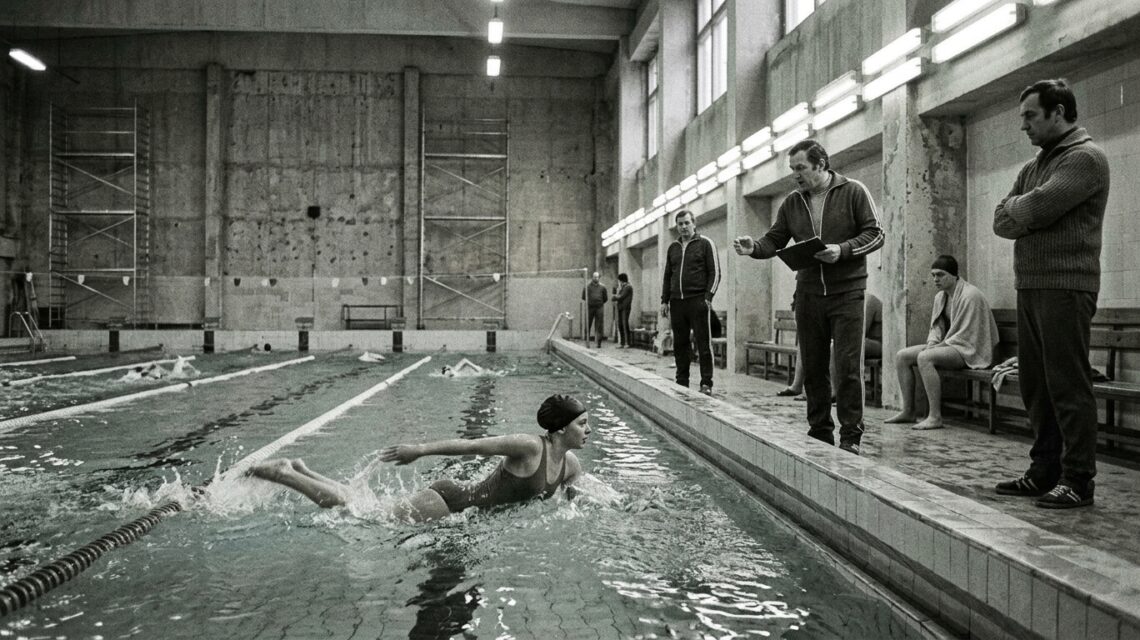
The women’s swimming competition was particularly striking.
East German swimmers won 11 of the 13 events.
That level of dominance drew attention because it was unusual for one country to control so much of an Olympic swimming program.
Later investigations established that anabolic doping was deeply embedded in East German elite sport.
However, the historical evidence does not permit a simple calculation of how many individual medals would have changed hands without doping.
Performance depends on numerous factors, including training, technique, competition and individual ability.
The state-sponsored drug program was a major component of East Germany’s sporting system, but it should not be treated as a precise mathematical explanation for every medal.
The more important finding is that many competitions took place under conditions that were fundamentally unfair to athletes who were not subjected to the same practices.
The system also exposed East German competitors to health risks they had not necessarily agreed to accept.
The Stasi helped protect the operation from exposure
The Ministry for State Security played a significant role in maintaining secrecy.
The Stasi was not the organization that independently invented East Germany’s doping system.
The operation involved political leaders, sports administrators, medical institutions and pharmaceutical researchers.
But the security service helped prevent information from reaching the public.
It monitored people involved in the program and collected reports concerning its confidentiality.
The German Federal Archives preserves records showing how the Stasi followed the operation.
One surviving document, a 1983 report from an unofficial collaborator using the codename Klinner, discusses concerns about secrecy surrounding State Plan 14.25.
The existence of such records demonstrates that concealment was an organized responsibility.
Officials understood that disclosure could damage the country’s international reputation and expose the use of prohibited substances.
The security apparatus therefore became part of the sporting system.
This arrangement made the program especially difficult for athletes to challenge.
A competitor who questioned medical instructions was not simply confronting a coach.
They were operating inside an authoritarian structure that controlled access to sporting opportunities and monitored dissent.
Athletes could win medals without knowing what had been done to their bodies
The most disturbing aspect of the East German system was not only that athletes received prohibited substances.
It was that some were denied meaningful knowledge of what they were taking.
Medical ethics requires patients to understand the nature and significant risks of treatment before giving informed consent.
The East German doping system frequently violated that principle.
Athletes could be told that tablets were vitamins or routine recovery aids.
They might not know the chemical identity of the substances.
They might not be informed about potential long-term effects.
And they could face pressure to comply with instructions from coaches and doctors.
That makes the distinction between voluntary doping and coercive doping essential.
An athlete who knowingly chooses to use a prohibited substance is not in the same position as a child who receives it without understanding what it contains.
Both situations may affect the fairness of competition.
But the second also involves the exploitation of a person whose autonomy and health have been compromised.
This is why the East German case is studied not only as a sports scandal but also as an example of state abuse.
Rica Reinisch became a symbol of the athletes harmed by the system
Rica Reinisch was one of East Germany’s most successful swimmers at the 1980 Moscow Olympics.
At just 15 years old, she won three gold medals.
Her achievements made her an international sporting star.
But her experience later became part of the wider investigation into East German doping.
Reinisch has spoken publicly about the medical problems and personal consequences associated with her years in the system.
Her case illustrates how the visible success of an Olympic athlete could conceal experiences that were neither voluntary nor harmless.
The public saw medals, records and celebrations.
The athlete could be dealing with medical interventions whose full nature had not been disclosed.
Other former competitors, including swimmers and athletes from different disciplines, later described similar experiences.
Their accounts helped shift the public understanding of East German Olympic success.
The central question was no longer only how the country had won so many medals.
It was what had happened to the athletes while those medals were being pursued.
What health problems have former athletes reported?
The long-term consequences of anabolic steroid exposure are medically complex.
Reported problems among former East German athletes have included hormonal disorders, reproductive difficulties, liver disease and psychological harm.
Some athletes have also described irreversible physical changes associated with androgen exposure.
However, individual medical conditions cannot automatically be attributed to doping without examining the person’s exposure history and other possible causes.
The strength of the evidence varies by condition and individual case.
Research into former East German athletes has documented serious health concerns, while compensation procedures have required evidence of substantial harm associated with involuntary doping.
The consequences also extend beyond physical symptoms.
Former athletes have described distress caused by discovering that trusted coaches or medical professionals had concealed the substances they were administering.
For some, the revelation changed how they understood their entire sporting careers.
Medals that had once represented personal achievement became connected to questions of deception, exploitation and lost health.
That psychological dimension is a central part of the scandal.
The fall of East Germany exposed the documents behind the medals
The Berlin Wall fell in November 1989.
German reunification followed in October 1990.
As the East German state collapsed, previously secret records became available to investigators and researchers.
The documents provided evidence that the doping system had been centrally organized.
Scientific reports, medical records, administrative documents and Stasi files helped reconstruct the operation.
Werner Franke and Brigitte Berendonk became particularly important figures in exposing the system.
Their research examined surviving documents and demonstrated the involvement of government institutions, medical specialists and sports officials.
A 1997 paper published in Clinical Chemistry described the use of anabolic steroids and other substances in East German sport, including evidence of government-supported research beginning in the 1960s.
The findings were significant because they moved the scandal beyond suspicion and testimony.
Investigators could examine documentary evidence of how the system had functioned.
The records revealed that doping had not been an isolated practice involving a handful of athletes.
It had been embedded in the structures of elite sport.
East German sports officials were prosecuted after reunification
The collapse of the regime also opened the possibility of legal accountability.
Investigations examined the roles of sports administrators, doctors and other officials.
Among the most prominent figures was Manfred Ewald, a senior sports administrator who had helped direct East Germany’s elite sporting system.
Manfred Höppner, a leading sports medicine official, also became a central figure in the legal proceedings.
In 2000, Ewald and Höppner received suspended prison sentences in connection with the administration of doping substances to athletes.
The proceedings established that responsibility extended beyond individual coaches or competitors.
Senior officials had participated in a system that exposed athletes to substances without proper consent.
The legal cases were an important part of Germany’s attempt to confront abuses committed under the former East German government.
But criminal proceedings could not undo the health consequences experienced by former athletes.
Nor could they fully compensate people whose childhoods and sporting careers had been shaped by decisions made without their informed agreement.
Germany created compensation programs for doping victims
The long-term consequences of the scandal eventually led to government assistance.
Germany adopted its first Doping Victims Assistance Act in 2002.
The legislation established a fund for former East German athletes who had suffered substantial health damage after receiving doping substances without their knowledge or against their will.
A second assistance law followed in 2016.
It provided a one-time payment of €10,500 to eligible victims who had not received assistance under the earlier program.
The second fund was later expanded to €13.65 million.
Applications under that program closed at the end of 2019.
These measures represented formal recognition that some former athletes had suffered harm through state-sponsored practices.
But compensation was not automatic.
Applicants had to meet eligibility requirements, including demonstrating relevant health damage and a connection to the doping system.
For people whose medical records were incomplete or whose symptoms developed many years later, establishing that connection could be difficult.
The compensation programs therefore addressed only part of the legacy.
They could provide financial assistance, but they could not restore lost health or erase the experience of having been deceived.
Did the East German scandal lead directly to the creation of WADA?
The East German doping scandal became an important example of the failures of earlier anti-doping systems.
It demonstrated how a government could organize prohibited drug use while concealing it from international sporting authorities.
But it would be inaccurate to claim that the scandal directly caused the creation of the World Anti-Doping Agency.
WADA was established in 1999 following broader international concerns about doping, particularly the 1998 Festina scandal in professional cycling.
The East German case formed part of the historical background that illustrated why stronger anti-doping institutions were needed.
Its lessons remain relevant to modern sports governance.
Testing alone cannot address every form of doping.
Athlete protection, independent medical oversight, whistleblower safeguards and institutional accountability are also necessary.
The East German system showed what could happen when the same authorities responsible for winning medals also controlled medical decisions and concealed wrongdoing.
The numbers behind East Germany’s doping system
| Measure | Documented figure or finding |
|---|---|
| State Plan 14.25 formally established | 1974 |
| Earlier government-supported doping research | Documented from 1966 |
| Estimated number of affected athletes | 10,000 to 15,000 |
| East German gold medals at Montreal 1976 | 40 |
| Total East German medals at Montreal 1976 | 90 |
| Women’s swimming events won by East Germany in 1976 | 11 of 13 |
| Major substance associated with the system | Oral-Turinabol |
| First German doping-victim assistance law | 2002 |
| Second assistance law | 2016 |
| One-time payment under the second law | €10,500 |
| Expanded second compensation fund | €13.65 million |
The figures reveal two very different aspects of East Germany’s Olympic history.
The medal totals demonstrate the country’s extraordinary international success.
The estimated number of affected athletes reveals the human scale of the system behind part of that success.
The compensation laws also show that the consequences did not end when East Germany disappeared in 1990.
Former athletes continued seeking recognition and assistance decades later.
Why the scandal cannot be reduced to a debate about medals
It is tempting to view East Germany’s doping system primarily as a question of unfair competition.
The use of prohibited substances undoubtedly raised serious questions about sporting integrity.
But the most disturbing evidence concerns the treatment of athletes themselves.
Children and adults were exposed to medical interventions they did not necessarily understand or consent to.
Some experienced lasting health consequences.
Others discovered only years later that substances described as harmless supplements had been part of a secret state program.
The system also exploited the ambitions of young people who wanted to compete at the highest level.
For many athletes, representing their country was a source of pride.
That ambition made them vulnerable to authorities who controlled their training, selection and medical treatment.
The government benefited from their achievements.
The athletes carried the risks.
That imbalance is what makes the East German case fundamentally different from an ordinary doping violation.
It was not simply a collection of individuals attempting to gain an unfair advantage.
It was a state-organized system in which political objectives could override the health and autonomy of the people expected to deliver results.
What remains unresolved decades after reunification
More than three decades after East Germany ceased to exist, the full consequences of its doping program remain difficult to measure.
Not every affected athlete has been identified.
Not every medical record survived.
And the long-term effects of exposure can vary substantially between individuals.
Some former athletes have received compensation.
Others have continued seeking recognition or assistance.
Historical researchers have reconstructed much of the system, but gaps remain in the documentary record.
The surviving evidence nevertheless establishes the central facts.
East Germany operated a government-directed doping program.
The program involved anabolic steroids and other substances.
Athletes, including minors, were sometimes given those substances without informed consent.
The Stasi helped maintain secrecy.
And the consequences continued long after the medals had been awarded.
The story of State Plan 14.25 therefore remains one of the clearest warnings about the danger of allowing political ambition to override medical ethics in sport.
East Germany’s Olympic medals were celebrated as proof of national achievement.
For many of the athletes who helped win them, the hidden cost became apparent only years later.
+ Siga o Giro no Facebook
+ Siga o Giro no Instagram
Leia Mais: